|
Link to Word Wall Handout
Unleash Your Creativity Handout!!

This session by Caroline Ramsey Musselwhite and Brenda Del Monte was presented at the AZTap Conference in Arizona on June 3, 2024.
What's the Problem? Most educators who work with students with disabilities are aware that over-prompting can:

• Cause students to avoid risk-taking. Many students just want to be 'right' and over-prompting feeds into that. Students MUST take risks to learn.
• Contribute to 'learned helplessness.;' This is the situation where learners become passive and don't take any control over their learning.
Over-prompting is a problem in all areas, but this blogpost will focus on over-prompting during writing.
Over-Prompting in Writing? Partners may over-prompt during writing for a variety of reasons:
• For emergent writers, partners may 'help' so that it 'spells something.' This is a problem because emergent writing can be a window into what students are thinking and what they have learned. Errors can help educators figure out how to target instruction. Partners often tell students what to write, even though the ideas may not belong to the student.
• For early conventional writers, over-prompting can be equally harmful. We give hints and sound out words for them, coaching them to pick the 'right' letter. Early writers need to be able to have an idea of what they want to write, then translate that idea into the written word – whether with typical pencils or with alternative pencils. We often see very well-meaning aides telling students each letter that they should write in a word.
What to Do? Just stop! And help everyone – parents, therapists, teachers, paras – understand that learners must take risks and try to 'figure it out.' That gives us:
• Data: Unprompted writing samples across time provide very helpful data to show progress
Formative Assessment: We can look at writing samples and develop instruction that targets the needs of individual students.
Modeling, Minilessons, and Feedback. Remember that the 'instruction' part of writing comes before they write independently, through modeling, short minilessons, and feedback! So don't worry if 'it doesn't spell anything' (emergent learners) or 'He spelled most of the words wrong' (early conventional learners). We can review this unprompted writing to determine :
• What we should model .Examples include choosing a word to caption a picture, then showing how to sound it out, or using the student's alternative pencil to write a caption for your own photo.
• Minilessons. These very brief lessons focus on one skill, such as showing how to pick a topic from a photo album on a device, how to use an alternative pencil, or how to brainstorm ideas.
• Feedback. Instructional feedback helps connect what emergent students have written to meaning. It is far beyond reinforcement (good writing), and should be connected to the topic.
SWITCH – Making Change!!
 I've been thinking about change alot. I first read this book more than 10 years ago. I remember reading it on a plane – one of those rare times when I was upgraded to first class. I kept annoying the businessman beside me as I laughed out loud . . . more than once!
Then I was reading it on a subway, on the way to give a talk at Columbia Teacher's College in NYC . . . I was so engrossed that I looked up and realized that the train had stopped at the end of the line, and everyone else had gotten off. I was so engrossed that I didn't notice.
I point out those stories because:
a) I'm not a big reader of nonfiction, since I have to read so much for work
b) This book is incredibly readable!
And, this book has changed the ways I teach, coach, and present. For example, when presenting I try hard to:
• Reach the 'Rider.' The rider refers to our analytic brain. The rider needs specifics. Step by step. So I've done a zillion 'tips' posted at my website – www.aacintervention.com – that are very specific and step-by-step.
• Readh the 'Elephant'. The elephant refers to our emotions - if we don't get the elephant on board with change, good luck! Because the elephant is BIG and goes wherever he wants! We can reach the elephant by telling stories and showing videos that really show change (or the lack of change!)
• Smoothing the Path. I hadn't really thought about the importance of smoothing the path until I read this book. We NEED to have our path smoothed because we are so overwhelmed. One example for me is to set up a 'dropbox' or google drive with materials following a presentation, so people don't have to search for my zillion tips, but can find them in folders that make sense. A coaching example is that I'm going to four new classrooms tomorrow. Each teacher will get a goodie bag with materials that I'll be suggesting and have found helpful.
So if you want to read SWITCH, you can probably get it cheap as a used book. Here's the Amazon link:
ENJOY!
BE SAFE!
The last 10 years I've been focusing on these 6 things. But wish I'd started earlier, so thought I'd add this. The best two things that I've found to support me are water aerobics and zumba.

Balance: Waiting in line for an airplane restroom is a great time to practice this!
Exercise: Outside is best! There's just something about outdoor exercise (kayaking, swimming, hiking, biking) that is WAY better than any class!
Strength: Free weights are great, but don't foget the resistance of working out in the water!
Flexibility: I find that it's fun to sneak in some stretches while waiting in line (bank, grocery, airport).
Eating: Okay, so my eating isn't ALWAYS healthy (or even ish!).

Real Change / Deep Change / Lasting Change
• Real Change: Not just surface change such as shiny technology, or cutesy boom cards, but TRUE change that leads to life changes for the learners that we serve. Change such as:
- Helping learners develop comprehensive literacy to the highest level possible. This must include all of the components of literacy, including generative writing with the alphabet.
- Supporting people who use AAC in using their systems to engage with the world, beyond wants and needs, sharing who they really are, and empowering them.
• Deep Change: This means helping educators, families, and learners develop cognitive clarity, so that they understand what they are doing, why they are doing it, and what the outcomes will be. (See Erickson & Koppenhaver, Comprehensive Literacy for All, 2020, p. 20)
• Lasting Change: Education is fickle and sometimes change can be short-lived. And sometimes that might be a good thing, such as the push for 'errorless learning' (good teachers know that when learners make errors it shows what they are thinking, and helps us target our instruction). But when we make some real, deep changes, we hope that they can last. Some lasting changes are about stopping practices that we have done for years. Others are adding new practices that make a difference. Samples of change that we hope is lasting include:
- Going beyond just sight word instruction in teaching reading.
- Recognizing that hand-over-hand instruction is not good practice, and is harmful to learners.
- Acknowledging that copying and tracing are just sensorimotor tasks and do NOT lead to generative writing with the alphabet.
- Creating alternative pencils, modeling them, and using them for generative writing.
- Developing robust communication systems for all learners, including learners with multiple challenges.
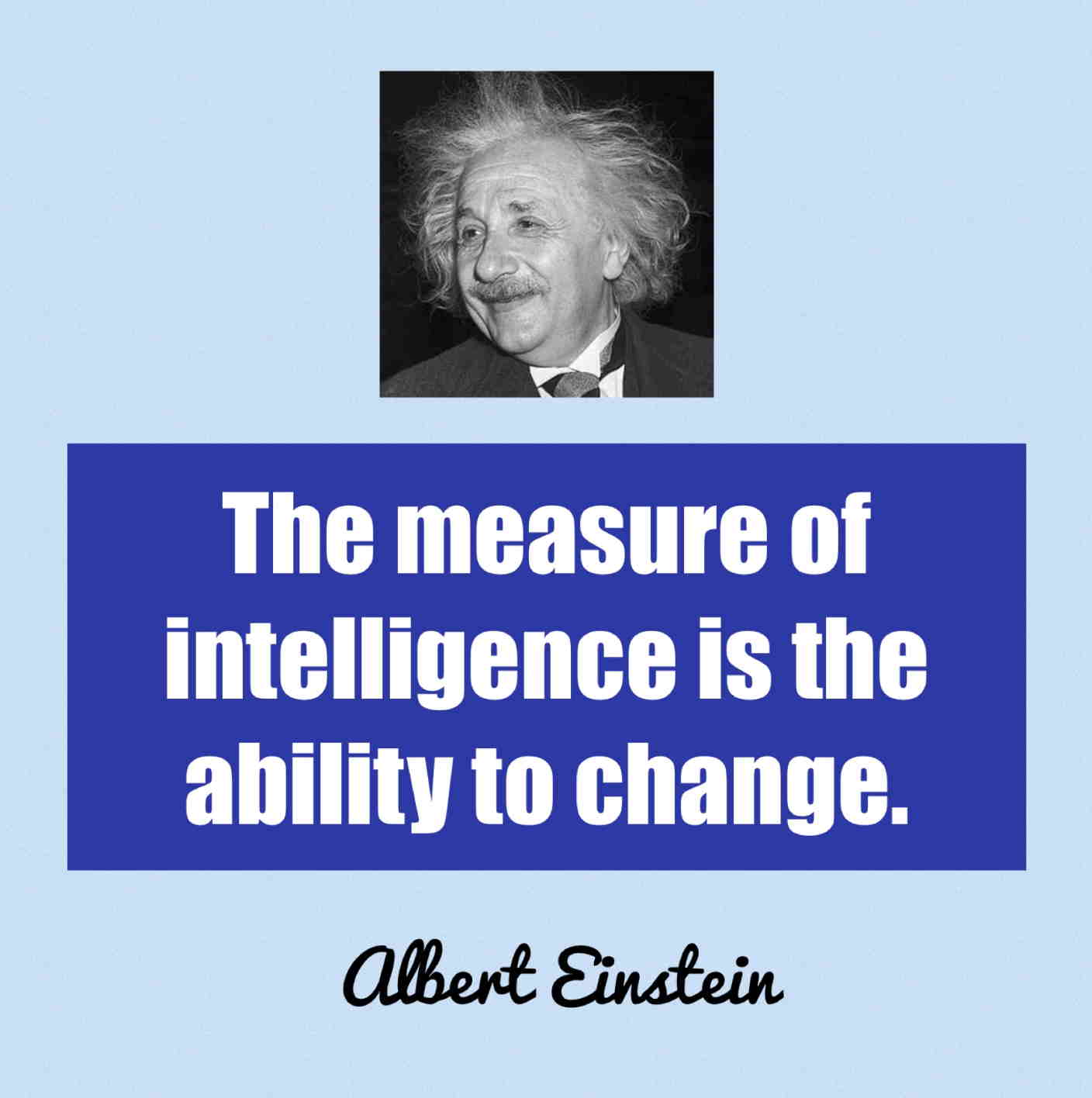
The above quote by Albert Einstein is especially powerful. Are we smart enough to change?

WHERE: This tip can be downloaded from the website AAC Intervention. Go to Tips of the Month and look for Tip # 4 for 2021.
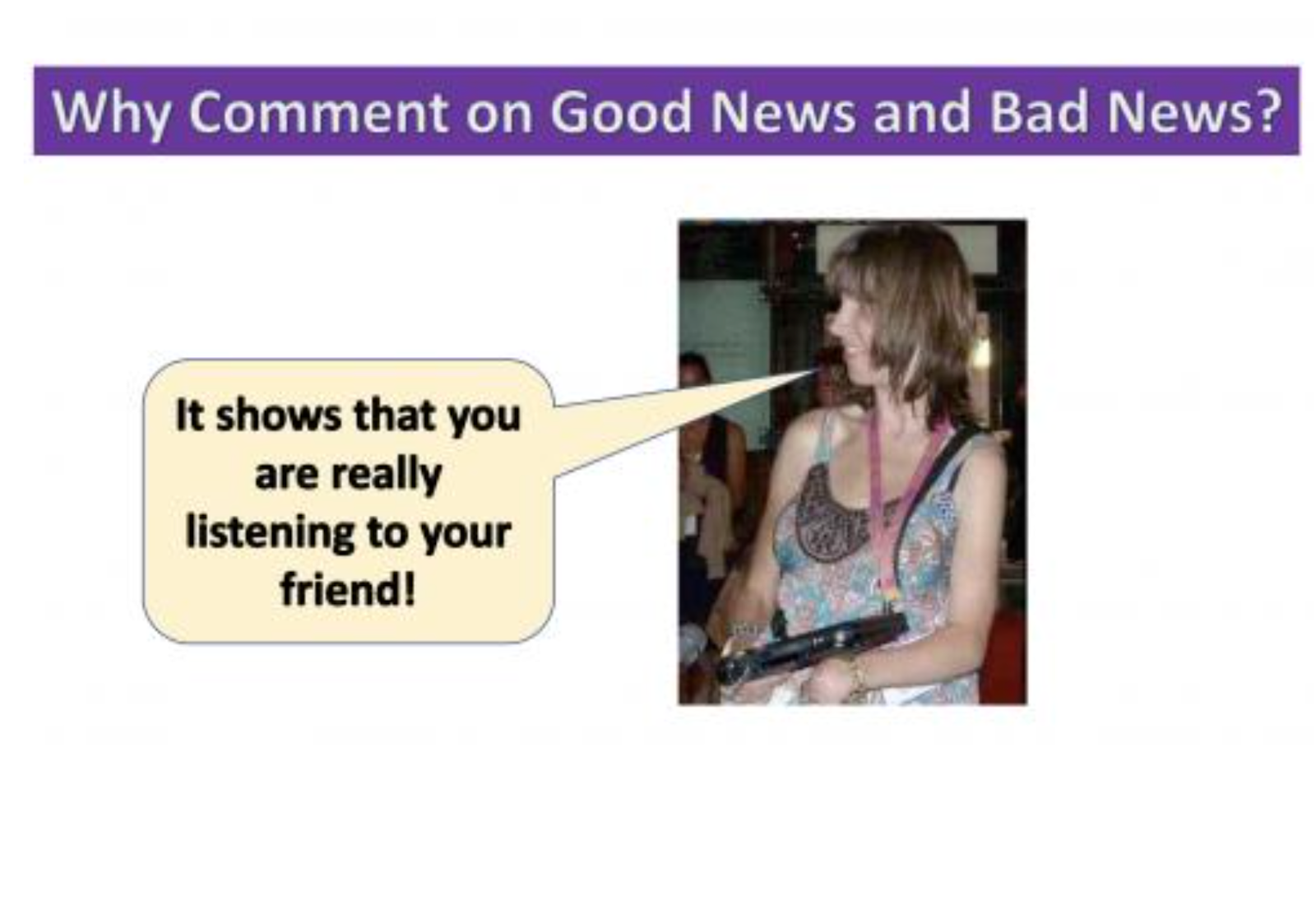
What Are They? Good news / bad news are stories that have both good and bad parts, so that students who use AAC can practice giving:


•Neutral Comments: Using core language (REALLY. INTERESTING) or pre-stored comments (WELL, OKAY).


The Good News / Bad News about cooking follows a story about cooking Mac and Cheese,
and the ups and downs that happen while cooking We can all relate to that, right?
So go to www.tarheelreader.org , choose Find a Book, and search for Krista H to find these powerful books!!
And THANKS to Columbia Regional Inclusive Services for supporting this project!!

Why. Alternative pencils are used for learners who can't use traditional tools such as pencils, pens, or markers to write.
How. They could be accessed by:
• Direct select with a finger point or hand
• Eye gaze
• Partner assisted scanning
• Switches

https://www.med.unc.edu/healthsciences/clds/alternative-pencils/
Follow ihopeNYC on Instagram to see images and stories of students using alternative pencils.
Stay Tuned! I will post more articles on alternative pencils at this blog!

Why: For students with good fist-pointing skills, this can be an efficient tool.


Where: The blogpost can be found at the Building Wings website. Here's a direct link:

Where Can You Find It? You can download the tip that summarizes this information PLUS a sample letter that you can share with parents. What a great way to start out 2024, by encouraging more reading!!

Downoad this tip here:


What? This podcast series is developed by Brenda Del Robertson Monte and Sarah Kinsella. They produce podcasts from amazing presenters available to listen or watch on YouTube. Brenda and Sarah are skilled interviewers and have access to amazing presenters. They are all fantastic, but Krista Howard's podcast explaining how she could have been better supportive as a student from elementary through high school is especially powerful.
Where? Here's a link for the entire series:
Awe and Wonder Literacy Series

How often do you make a list?
- Every week?
- Every day?
And what do you DO with that list?
Check out this tip about making lists WITH your students. The tip also suggests ways to support students in composing lists, and reminds us that those lists need to be USED in order to feel meaningful!!

Go to AAC Intervention and look for Tip # 6, 2021.
Here's a direct link:
http://www.aacintervention.com/page/180009852/180122670/Tips-2021
Customize Your Comments - The Book!
Where? Find this free book at Tarheel Reader. Here's the direct link:
https://tarheelreader.org/2022/06/10/customize-your-comments-aac-fun/
Why? As you will see in the book, Krista has many ideas about why customizing comments is important.

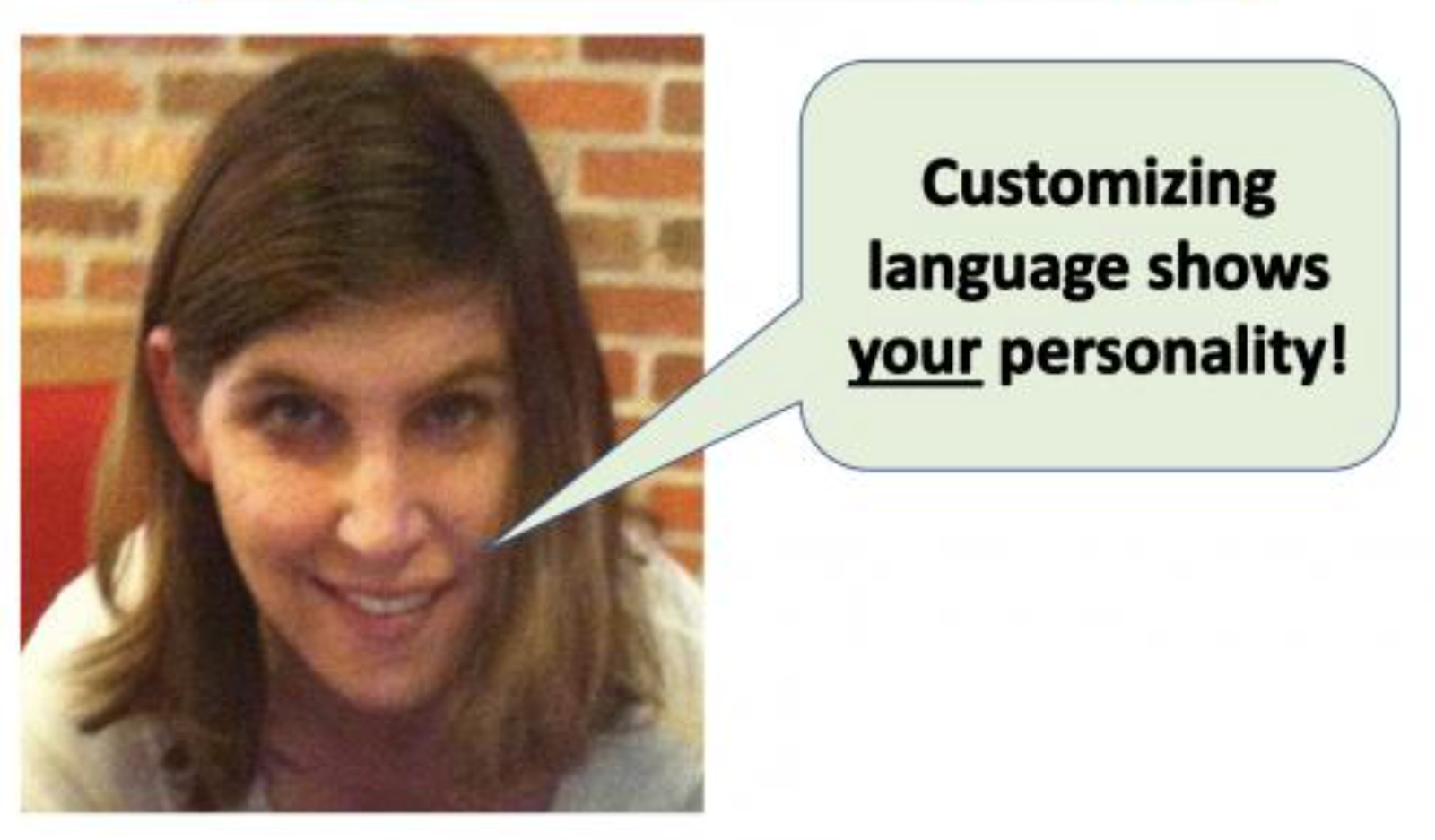
• Share with people who are on their journey of learning about AAC (teachers, paras, speech-language pathologists, SLPAs), and may not have realized the importance of customizing comments.
• Share with families, so they can support their children in picking words to customize aking comments
• Read the book with people who use AAC and work with them (and hopefully their peers) to choose comments that will reflect their personalities!
Devices and Pianos - What's the Connection?
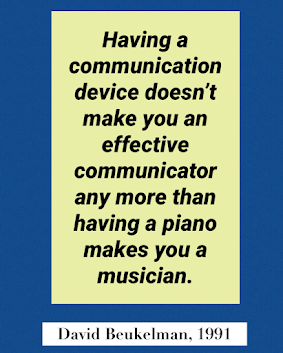
But how often to we see people succumbing to 'The Myth of the Box' – the idea that once a learner gets an AAC system, they should learn to use it easily, with minimal instruction.
Quotes such as this one can help us really think about:
• How long it takes to become a 'musician' (Time)
• The strategies and training needed to be successful (Training)
• The practice of all of the components, including the keyboard, pedals, etc. (Tools)
Call To Action: How will YOU use this quote? Here are a few ideas - please share more!
- Share it on your social media, to spread the word
- Make a poster for the wall
- Print this on the tote bag that carries the communication device / light tech system
- Show it at a professional development session
What & Why. It is often helpful to mirror the screen of your tablet (for me, and iPad) unto your Macintosh computer. Maybe you want to model using an AAC system that matches that of one of your students. Maybe you want to show how to build words using the Word Wizard app. I find multiple uses for this trick almost every session!!
Yes, you can do this through a mirroring app, but that puts demands on wifi signal. And yes, you can use a document camera, but that often results in glare, or a less-than-stellar image. This solution has been highly effective – and efficient – for me. (Note: This may be possible for other computers, but I have only done it on a Mac). This is helpful for:
• Classrooms projecting the teacher's computer, using an interactive whiteboard, or just a projector.
• Distance learning sessions.
• In-home sessions, mirroring to an Apple TV.
Needed Tools.

Cable to connect your tablet to your Macintosh.
Note: I had to use an adaptor as my cable is USB and my computer requires USB-C
How To Do It.
Plug your iPad into your computer, and turn it on.
1) Open QuickTime Player on your computer.

3) Move your mouse to open the toolbar
4) Click the small down arrow

5) Click both times you see the name of your iPad
(Mine is labeled Caroline 3). The 1st selects the camera for your iPad, and the second allows you to use the audio from your iPad, when you do something that is active.
6) Turn the volume up on on the toolbar, so that your iPad sound can be heard. (Note the blue bar, showing that it is on maximum.
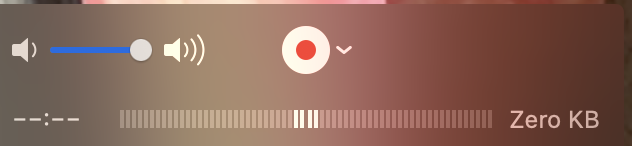
Now your iPad screen appears over top of whatever was open on your computer. You can enlarge it on your computer to avoid distractons!


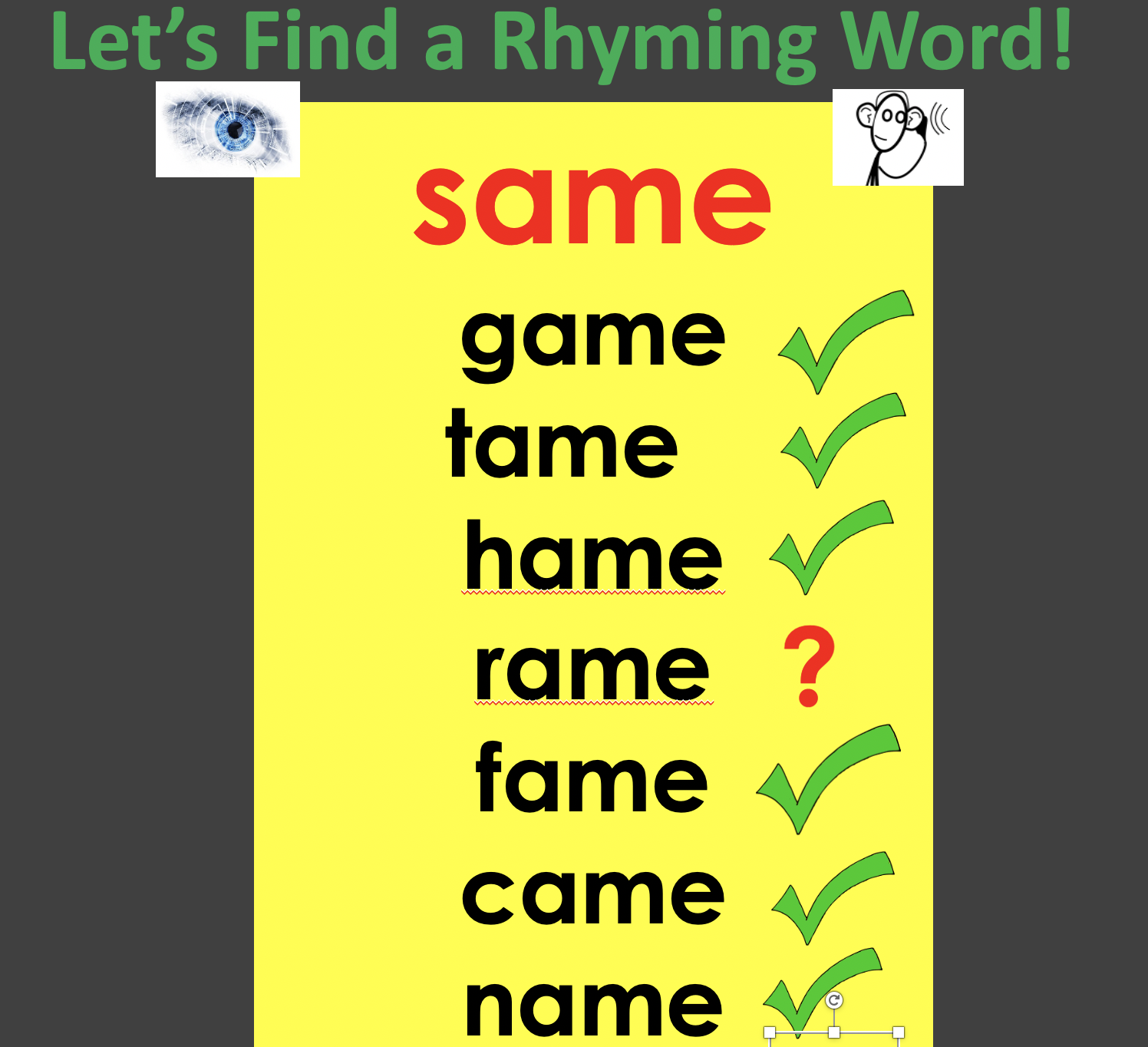

Moving From Computer Screen to iPad Screen: Sometimes you want to go back and forth. Simply use the Command-Tab keys. It will show icons of all currently open applications s on your computer. So, I wanted to go to PowerPoint to show that the word we built using Word Wizard was a real word. When you want to show the iPad screen, simply click on the Quick Time Player image.

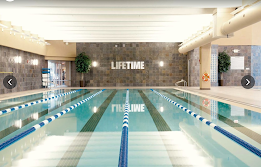
That's right, the pool! I've been taking Aqua Zumba and Aqua Exercise classes.
Pools are LOUD! And the music is LOUD! The instructors can't rely on their voices to give instructions.
The more effective instructors are masters of multi-modal communication.

• Broad Gestures. They point to a body part that will be involved in the next activity, such as slapping their right thigh two times to indicate: "Use your right leg." They tap their abdomen, to indicate: 'Use deep breathing.'
• Smaller Gestures. Effective instructors also use smaller gestures, such as holding up 3 fingers, then 2, then one to count down to the start of the next exercise. They also point to the specific muscle we are targeting.
• Facial Expressions. They show their enthusiasm for the group with huge smiles, encouraging the participants to try harder. They also use a head tilt along with the expression 'seriously?' if we aren't participating fully.
• Vocalizations. Many instructors weave vocalizations such as 'Woo!' or "Ole' into their routines to keep swimmers engaged and involved.
All of these non-verbal supports are both effective and efficient. Watching them made me realize that we need to do a better job helping individuals who use AAC develop their own multi-modal communication skills.
Let's do this!!
So . . . There's a Tip for This!
 |
Tip # 10, 2022