February is almost here and that means LOVE and FRIENDSHIP are in the air!!! Are you looking for a little inspiration to find some new fun, motivating, and age-respectful activities that promote and celebrate the authentic use of AAC?? We’ll share a few ideas of activities in the works at Fletcher Miller in February. Comment below and share yours, too! What better way to get your kids engaging meaningfully with their AAC than talking about those they love and admire the most!??
Create a Valentine’s Day playlist- Is your school/class planning a dance? Have your students use their AAC to make a rockin’ playlist. Students can nominate songs by using their AAC or use their AAC to critique popular love songs and say whether or not they make “the cut!!” Easily assemble your class’ Valentine’s Day playlist on youtube to share with families, friends, and even use at a school dance. Share via an email or social media post your students create using their AAC!
Elliot’s song review- will it make the cut for our Valentine’s Day playlist??
Hot or Not- have students compile a list of popular celebrities, activities, characters, trending topics, etc. Students use their AAC to rate the selections and whether or not they think the celebrity/character is hot/cool or not– and why!
https://www.youtube.com/shorts/1PubLJL8OWk
Plan a “Galentine’s” Day!- at Miller, we’re getting the gals together for a morning of girl-talk, Valentine’s Day sticker nails, chick flicks, and maybe even a few surprises from the gentlemen of Miller. The ladies will use their AAC to girl-talk, select their nail art, request and comment on the chick flicks, and comment on their surprise from the Miller gentleman. Everyone around these parts loves a good Galentine’s Day!!
Below: Miller’s Mr. Jason doing a student’s nails during the Winter Holiday Galentine’s Party at Miller:
Let Students Plan the Party!! Have students use AAC to plan the Valentine’s Day party using their AAC. Break off into sub-committees and plan the party in further detail as driven and directed by students’ AAC use. We can’t wait to see what the sub-committees have in store for us? Photo Booth??!! We’re IN!!!
The AAC-created Valentine’s Day party plan in Ms. Anna’s class:
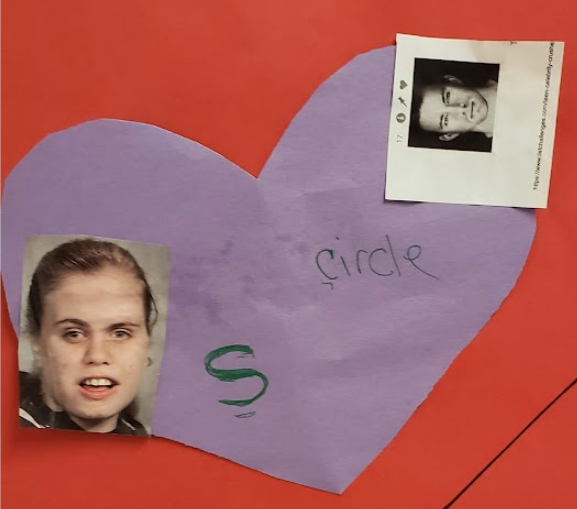
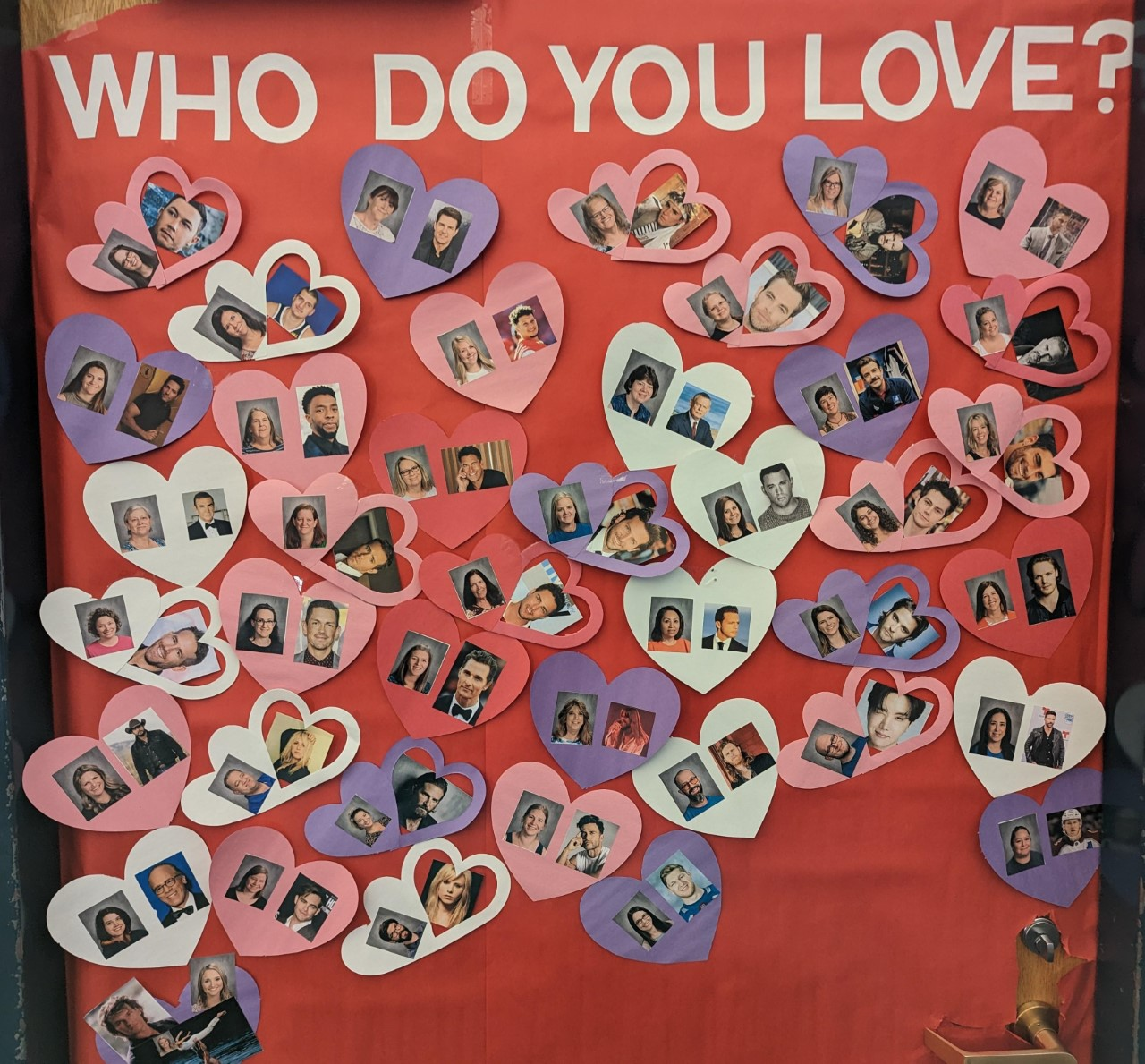
Celebrity Crush- have students (and staff!) use AAC to share their favorite crush. Have them spell out names, share the characteristics of their celebrity crush, and/or tell why they chose that person. Expand this activity to make a game– “Who is your celebrity crush?” Have students match their classmates to their celebrity crush using their AAC.
Below: a student’s celebrity crush revealed!
Staff celebrity crushes revealed:
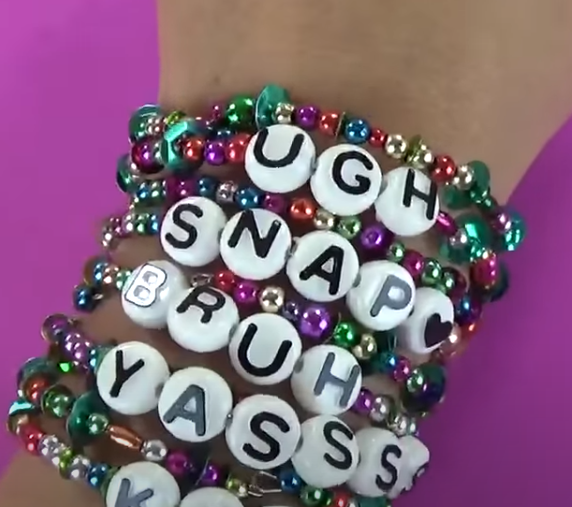
Beaded Bracelets- beaded bracelets with sayings or personally significant words are all the rage! Have students use their AAC to select words or create sayings that are powerful to them or their friend. Encourage them to make an “artist statement” on why they chose that word(s) for themself or their friend. This is a great way to show self-love and empowerment– or make a bracelet for a friend!
What’s trending now/current events tie in– “Little Words Project” : https://www.youtube.com/watch?v=9nRj1BAwyNI
How to make the bracelets video here: https://www.youtube.com/watch?v=QTnQdtU9gX0
Speed “Connections”- think “Speed Dating” but without the pressure! Have students practice using AAC to connect with classmates and peers by engaging in brief conversations and rating whether or not they felt a connection with others they conversed with. This is a great way to practice social skills and pragmatics using AAC to introduce themselves, ask questions, and respond to questions and comments from a communication partner. Finally, use AAC to comment on their perception of their communication partner and whether they felt the spark of friendship ignite!
To help build that background knowledge of “Speed Connection,” check out this clip beginning at the 1 min mark: https://www.youtube.com/watch?v=K7IW6PQnZIg
A special Valentine’s day note to mom/dad/caregiver saying WHY the student loves them so much- Let students use AAC to request materials, colors, etc they wish to use to create the perfect valentine for their loved ones. Use AAC to create the perfect message for their special someone.
Valentine’s Day Mad Libs: Work with a partner and use AAC to complete Valentine’s Day Mad Libs. Use a free printable or create your own using AAC!
Free printables here: https://www.mamasmiles.com/printable-mad-libs-for-kids/
Staff Treat! Whip up a sweet treat for staff and leave a personalized message with each sweet treat using messages from students using their AAC.



Have fun and enjoy! Don’t forget to comment below and share your own AAC-rich Valentine’s Day activities!!
Follow us on Instagram! @fletchermillerschool

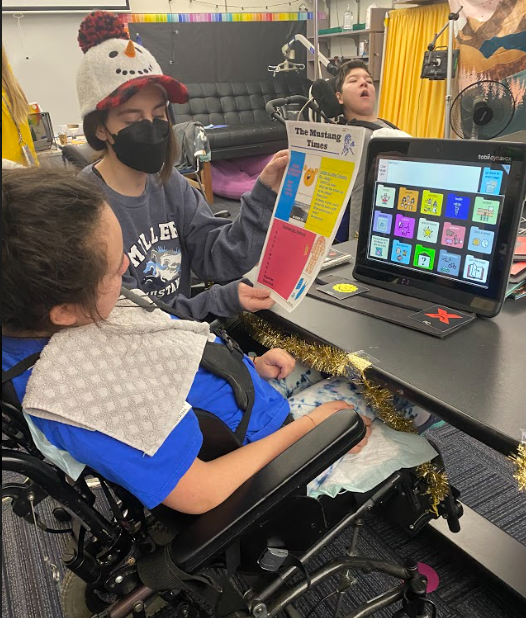
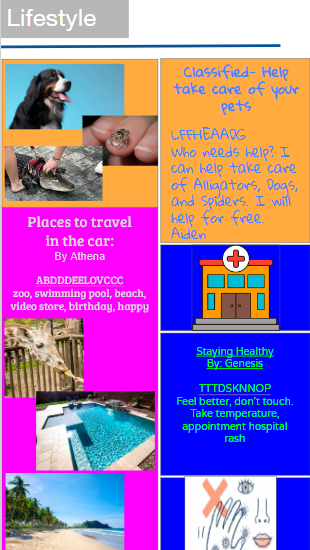 If they selected an obscure topic or section, we made sure to learn more about the topic or section first before asking them to write. For instance, this month a student selected that he wanted to write a classified ad. He also picked dogs, spiders and alligators in his topic selection. We explored different classified ads and what they mean. Some sell items, some post about jobs, and some highlight an event, like a garage sale. He decided to stick with the “job” section of the classifieds. It was easier for his learning partner to then help him explore jobs where he might see a dog, spider or alligator. He decided on petsitter. For an emergent communicator, this is a huge amount of fringe and tier two and three language. We acknowledge that, and align our expectations to balance out the engagement of the student. We know the students will be absorbing much of these lessons receptively and that generating novel language around these topics will be tough. But, viewing this as an authentic writing opportunity and a world knowledge building experience, makes it fun and valid learning. The alternative pencils are used to generate letters and word-like groupings, and the writing was followed up with specific feedback from the students' learning partners. In the example of the classified ad, the student selected letters “LLF.” Words like “leash, learn, food, fun” were used to make a connection between their writing, and words commonly used by a pet sitter. Then the students are asked “Would you like to add any additional words from your communication book?” Some pick additional words, and some don’t. The last task of generating the newspaper is our editing section. We ask students to pick pictures they want to be included with their posts, fonts and colors. On the last day of newspaper creation, we set up a newspaper stand and sell the newspaper. This time is a blast. Kids love hearing others read their newspaper and talk about it with them! Here are some snapshots of our newspaper! Let us know if you create one with your class!